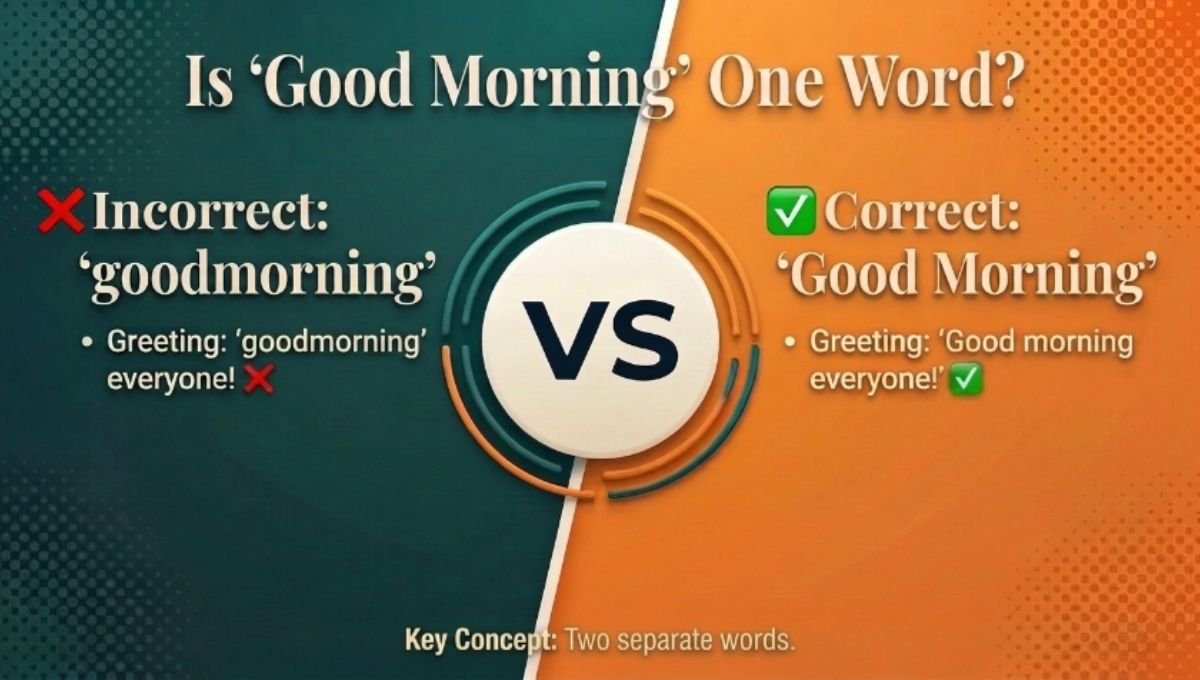
If you have ever typed “goodmorning” in a quick text and wondered if that is actually correct, you are asking a question a lot of people quietly search for. Is “good morning” one word? No, it is not. The correct form is always two separate words: good morning. Understanding why this trips people up, and how to use the phrase correctly, only takes a few minutes.
The Quick Answer: Good Morning Is Two Words
Good morning is always written as two words in standard English. It is not “goodmorning,” and it is not hyphenated as “good-morning” in normal use. This holds true whether you are texting a friend, writing a business email, or greeting someone in person. If you are asking is “good morning” one word, the answer is a clear no.
Why Do People Think “Good Morning” Might Be One Word?
The confusion usually comes from how naturally the two words flow together in speech. When you say “good morning” out loud, it often sounds like a single, quick sound rather than two distinct words. Texting habits make this worse, since many people compress common phrases to save time, the same way “good night” sometimes gets typed as “goodnight” (which, unlike “good morning,” actually does have an accepted closed form in casual use).
That inconsistency across similar greetings is part of why people keep asking is “good morning” one word in the first place.
What Does “Good Morning” Actually Mean?
Good morning is a greeting used to say hello to someone during the morning hours, generally from sunrise until around noon. It can also function as a farewell in some contexts, such as ending a meeting or a phone call that took place in the morning.
Common uses include:
- A greeting when first seeing someone in the morning
- A polite way to open an email sent during morning hours
- A formal greeting at the start of a meeting or presentation
- A farewell when leaving a morning conversation
Grammar Breakdown: Part of Speech and Structure
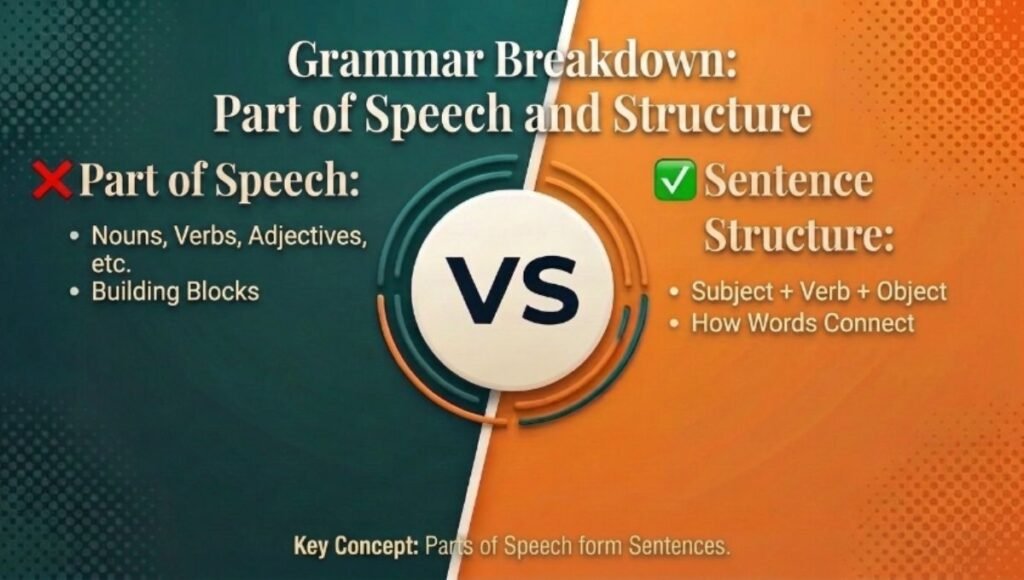
Understanding the grammar behind this phrase makes the answer to is “good morning” one word easy to remember for good.
- Good: an adjective, describing the quality of the morning
- Morning: a noun, referring to the early part of the day
- Phrase type: a fixed greeting, functioning as an interjection in conversation
- Capitalization: capitalize both words only when starting a sentence or writing it as a direct greeting, such as in a card or a heading. In the middle of a sentence, it is lowercase: “She said good morning as she walked in.”
- Punctuation: when used as a greeting on its own, it typically ends with a period or an exclamation point, as in “Good morning!” It does not require a comma before someone’s name unless you are directly addressing them, as in “Good morning, Sarah.”
Because “good” is an adjective modifying the noun “morning,” this phrase follows the normal English pattern of adjective plus noun, the same structure as “nice day” or “long week.” That pattern is exactly why it stays as two separate words instead of merging into one.
Does “Goodmorning” Have Any Legitimate Use?
Not in standard writing. “Goodmorning” as one word does not appear in major dictionaries and is not considered correct in formal or professional English. You may see it used informally in fast texting or social media captions, but it is still technically incorrect, unlike “goodnight,” which dictionaries do recognize as an accepted one word form in casual use.
If you are writing for work, school, or any formal audience, always use good morning as two words.
Where Does the Phrase “Good Morning” Come From?
Good morning developed from the older English custom of pairing “good” with the time of day as a greeting, a pattern also seen in “good afternoon,” “good evening,” and “good night.” This structure dates back to Middle English, when greetings often combined a wish for wellbeing with a reference to the time of day. Since each of these phrases developed the same way, most of them still function as separate words rather than closed compounds.
More related Post : Take Effect or Take Affect? The 1 Correct Phrase Explained https://feastinsidar.com/take-effect-or-take-affect/
How to Pronounce “Good Morning” Correctly
Good morning is pronounced as two distinct words: “good” (rhymes with “wood”) and “morning” (MOR-ning). In casual, fast speech, the two words often blend together, which is part of why the phrase feels like a single sound. Slowing down and pronouncing each word separately helps reinforce that it is written as two words as well.
Is “Good Morning” One Word: Quick Comparison Table
| Form | Correct? | Meaning | Common Use |
| Good morning | Yes | A greeting used in the morning hours | Standard form in all writing, formal and informal |
| Goodmorning | No | Not a standard spelling | Informal, appears mainly in fast texting or casual captions |
How to Use “Good Morning” Correctly in a Sentence
Once you know good morning is always two words, using it correctly is simple. It usually appears at the start of a greeting, an email, or a sentence describing someone’s actions.
- As a greeting: “Good morning! I hope you slept well.”
- Mid sentence, lowercase: “He mumbled good morning before heading to the kitchen.”
- In an email opening: “Good morning, team. Here is today’s agenda.”
- As a farewell: “Good morning, everyone, see you at the next meeting.”
Real Life Examples in Different Contexts
Everyday conversation: “Good morning! Did you catch the sunrise today?”
Workplace communication: “Good morning, all. Please review the attached document before our call.”
Academic writing: “The teacher began each class with a brief good morning before starting the lesson.”
Email: “Good morning, Mr. Reyes. I wanted to follow up on yesterday’s proposal.”
Business writing: “Good morning, valued customers. Our updated hours begin this week.”
Casual writing: “Good morning, sunshine, ready for coffee?”
Each example treats “good morning” as two words, which is exactly how it should appear in both formal and informal English.
Common Mistakes With Good Morning
People asking is “good morning” one word often run into a few predictable mistakes. Here they are, along with quick corrections.
Incorrect: Goodmorning everyone, hope you slept well. Correct: Good morning everyone, hope you slept well. This happens because the words blend together in speech, but they remain separate in writing.
Incorrect: She said Good Morning to her coworkers mid sentence. Correct: She said good morning to her coworkers mid sentence. Mid sentence, the phrase should be lowercase unless it starts a new sentence or is a direct quotation formatted as a greeting.
Incorrect: Good-morning, I hope your trip went well. Correct: Good morning, I hope your trip went well. Hyphenating the phrase is unnecessary and not standard, since “good morning” functions as two separate words, not a compound adjective.
Words Related to Good Morning You Should Know
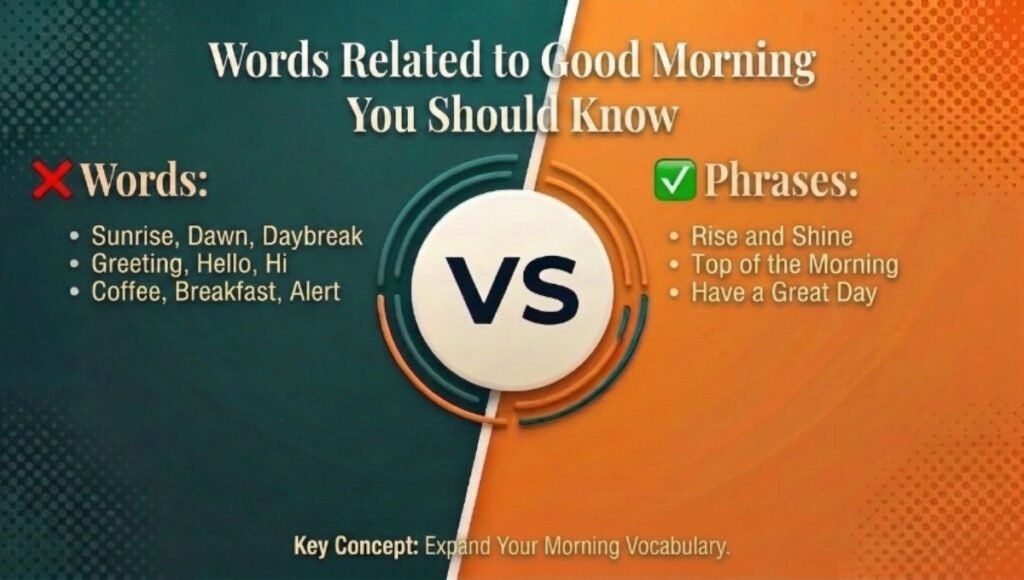
Expanding your vocabulary around this greeting makes similar phrases easier to use correctly.
- Good afternoon: the equivalent greeting for midday through early evening
- Good evening: used from early evening until night
- Good night: a farewell used at night, which can appear as one word informally
- Greeting: the general term for words used to say hello
- Salutation: a formal term often used for greetings in letters or emails
Formal vs Informal Usage: Does It Matter?
Good morning works in both formal and informal writing without changing form. A business email, a text to a friend, and a formal speech all use the same two word spelling. The only real difference across registers is tone and punctuation, not spelling. This consistency is one reason is “good morning” one word has such a clear, simple answer no matter the context.
Practical Tips to Remember the Correct Spelling
A few simple tricks can help you remember the correct form for good.
- Think of it the same way as “good afternoon” and “good evening,” which nobody writes as one word.
- Remember that “good” is an adjective describing “morning,” and adjectives and nouns in English almost always stay separate.
- If autocorrect or spellcheck flags “goodmorning,” trust it, since that is a reliable signal you need a space.
Frequently Asked Questions
Is “good morning” one word?
No. Good morning is always written as two separate words in standard English, whether the context is formal or casual.
What does “good morning” mean?
Good morning is a greeting used to say hello, and sometimes goodbye, during the morning hours, generally from sunrise until around noon.
How do I use “good morning” in a sentence?
Use it as a greeting at the start of a sentence, email, or conversation, such as “Good morning, I hope you have a great day” or “She greeted us with a cheerful good morning.”
Is “goodmorning” ever acceptable?
Not in standard or formal writing. It sometimes appears informally in fast texting or social captions, but it is not a recognized spelling in dictionaries or style guides.
Should “good morning” be capitalized in the middle of a sentence?
No, unless it starts a new sentence or is a direct greeting formatted like a heading. In the middle of a sentence, it stays lowercase, as in “He said good morning before sitting down.”
The Bottom Line
So, is “good morning” one word? No, it is always two words: good morning. Keep it aligned with “good afternoon” and “good evening,” and you will never second guess the spelling again.










1 thought on “Is “Good Morning” One Word? The 1 Simple Rule to Remember”