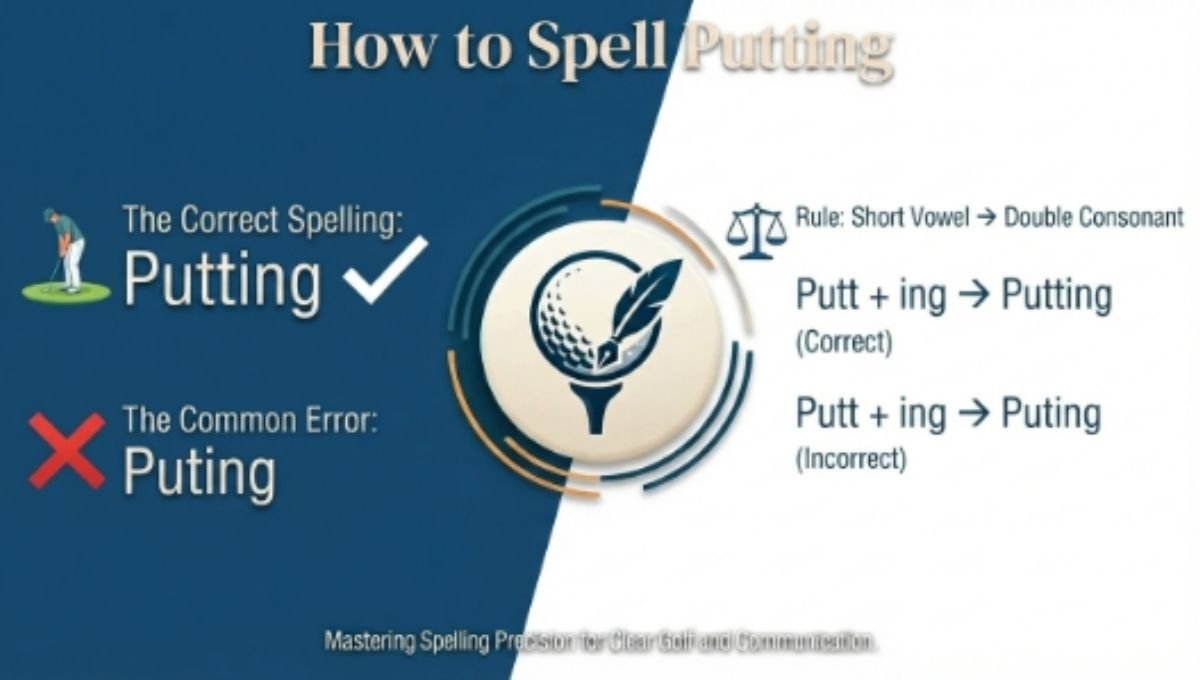
You know the word sounds simple, but the moment you go to type it, you second guess the number of t’s. That hesitation is common, because the spelling rule behind this word is not something most people were ever taught directly. Here is how to spell putting correctly: p-u-t-t-i-n-g, with two t’s, no exceptions. This guide breaks down exactly how to spell putting so the rule sticks for good.
The Correct Spelling of Putting
Putting is spelled with two t’s: P-U-T-T-I-N-G. There is no accepted alternate spelling, no informal shortcut, and no context, whether you mean placing an object somewhere or a golf stroke, where a single “t” is correct.
If you remember nothing else from this guide, remember that one fact. Everything below explains why the rule works the way it does.
Why Putting Has Two T’s Instead of One
The short answer is that the base word, “put,” already ends in a pattern that requires doubling before you can add “-ing.” Skipping that doubling step is the single most common reason people misspell the word with only one “t.”
Learning how to spell putting really means learning one small rule and applying it consistently, not memorizing the word as an isolated exception.
Breaking Down the Word: Put + Ing
Start with the base verb: put. It has three letters: “p,” “u,” and “t.” Now look at the pattern those letters form. You have a consonant (p), followed by a vowel (u), followed by another consonant (t). Spelling teachers call this a CVC pattern, short for consonant, vowel, consonant.
When a short, one syllable word ends in this exact pattern, English doubles the final consonant before adding a suffix that starts with a vowel, such as “-ing” or “-ed.” That is why put becomes putting instead of “puting.”
The CVC Spelling Rule Explained Step by Step
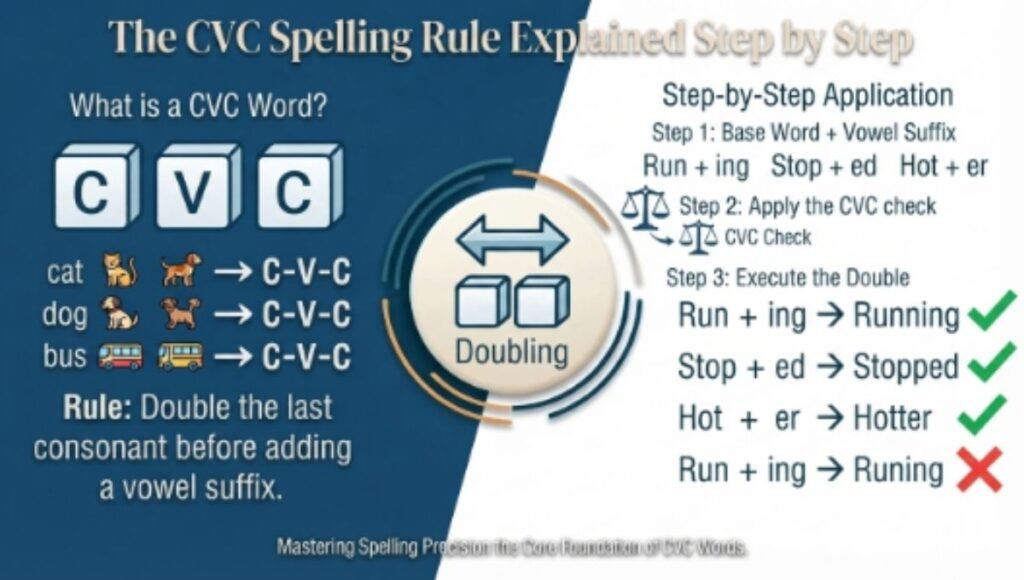
Here is the rule broken into simple steps, since this is really the core of how to spell putting correctly.
- Look at the base word and count its syllables. Put has one syllable.
- Check the last three letters. Put ends in consonant, vowel, consonant (p-u-t).
- Confirm the word does not end in “w,” “x,” or “y,” since those letters block the doubling rule.
- Double the final consonant. The final “t” becomes “tt.”
- Add the suffix. Attach “-ing” to get putting.
Follow these same five steps with other short verbs and you will notice the pattern repeats: sit becomes sitting, run becomes running, and stop becomes stopping. This is really the entire method behind how to spell putting, applied to any short verb that fits the same pattern.
More related Post : Put or Puts? 4 Rules That Make the Right Choice Automatic https://feastinsidar.com/put-or-puts/
How to Pronounce Putting Correctly
Putting is pronounced PUT-ing, using the short “u” sound found in words like “foot” and “book.” It never rhymes with “cute” or “muting,” which use a long “u” sound instead.
This pronunciation detail is actually a useful shortcut. Words with a short vowel sound in the base form typically double their final consonant before “-ing,” while words with a long vowel sound usually do not need doubling at all.
The spelling and pronunciation of putting stay identical in both American and British English. This is one grammar point where the two varieties agree completely, so there is no need to adjust the spelling depending on your audience or publication style.
Putting vs Similar Words That Follow Different Rules
Not every word ending in “-ing” doubles its final consonant, so it helps to see the contrast side by side.
| Word | Correct Spelling | Doubles the Consonant? | Reason |
| Put | Putting | Yes | Ends in CVC pattern |
| Sit | Sitting | Yes | Ends in CVC pattern |
| Hope | Hoping | No | Ends in silent “e,” which is dropped |
| Start | Starting | No | Ends in two consonants, not CVC |
Step-by-Step: How to Spell Putting From Scratch
If you are building the word from memory, work through it this way instead of trying to recall the whole spelling at once.
- Start with “put.”
- Ask whether the word ends in a single vowel followed by a single consonant. It does.
- Double that final consonant, turning “t” into “tt.”
- Add “-ing” to the end.
- Read the result out loud: putting.
Practicing this sequence a few times is often faster than memorizing the finished word, especially for learners who are still building confidence with English spelling patterns.
Putting in Everyday Sentences
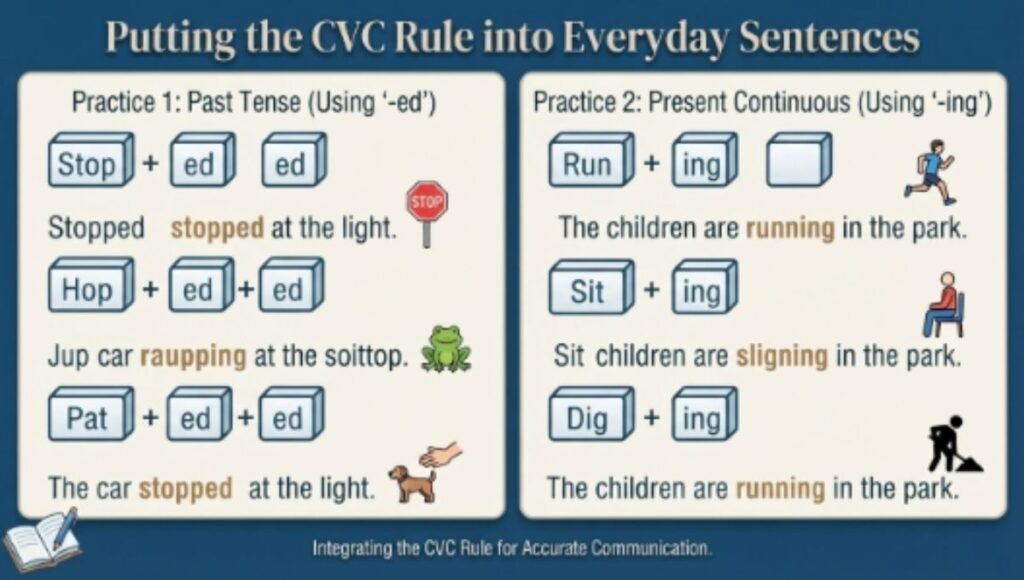
Seeing the word used naturally reinforces the correct spelling better than a rule alone.
- Everyday conversation: “I’m putting the leftovers in the fridge before we head out.”
- Workplace communication: “She’s putting together the onboarding checklist for new hires.”
- Email: “Thanks again for putting this proposal together on such short notice.”
- Academic writing: “The study focuses on putting theoretical frameworks into practical use.”
- Formal writing: “The board is putting the final budget forward for approval next week.”
Putting in Golf Terminology
Golf uses “putting” for the short, controlled stroke played on the green, as in “putting green” or “putting stroke.” This sense of the word comes from the noun “putt,” which already has a doubled “t,” so adding “-ing” simply preserves it rather than creating it from scratch.
Because “put” and “putt” are different words with different meanings, some writers assume the golf term must be spelled differently. It is not. Both meanings of “putting” share the identical spelling, which makes this one of the simpler parts of how to spell putting once you know the connection.
If you are ever unsure which meaning a sentence intends, context almost always makes it obvious. A sentence about “putting the mail on the table” clearly refers to placement, while a sentence about “putting on the eighteenth hole” clearly refers to golf, even though the spelling never changes between the two.
Common Spelling Mistakes to Avoid
Incorrect: He is puting his notes in order before the meeting. Correct: He is putting his notes in order before the meeting. The single “t” version skips the required doubling step for this CVC verb.
Incorrect: We were puting off the renovation for another year. Correct: We were putting off the renovation for another year. Phrasal verbs like “put off” follow the same spelling rule as the base word.
Incorrect: The golf course redid their puting green last spring. Correct: The golf course redid their putting green last spring. The golf related meaning of the word is spelled exactly the same as the everyday verb form.
Words That Follow the Same Pattern as Putting
| Base Word | Correct -ing Form |
| Put | Putting |
| Sit | Sitting |
| Run | Running |
| Swim | Swimming |
| Plan | Planning |
Recognizing this shared pattern makes it easier to apply the rule automatically the next time a similar word comes up, instead of relearning it from scratch each time.
Memory Tricks for Spelling Putting Correctly
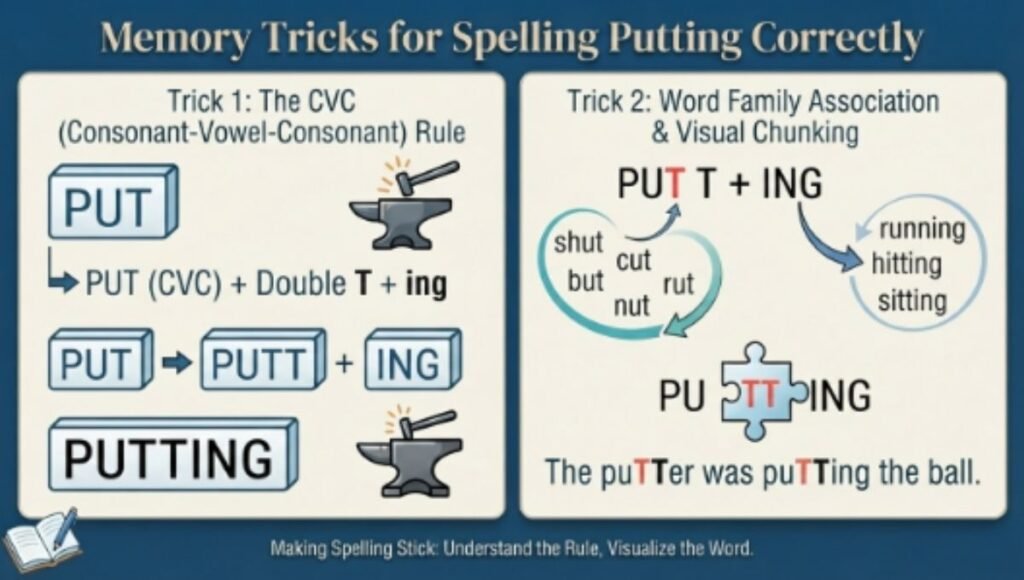
A few simple habits make the correct spelling stick without much extra effort.
- Picture the word “sitting” next to “putting.” Since both follow the same rule, remembering one helps you remember the other.
- Say the word slowly and listen for the short vowel sound, which is your cue to double the consonant.
- Write out the CVC breakdown (p, u, t) before adding the ending whenever you are unsure.
- If autocorrect or a spell checker flags a single “t” version, trust the correction instead of overriding it.
These small habits are usually all it takes to make how to spell putting feel automatic rather than something you have to stop and think about each time.
Frequently Asked Questions
How do you spell putting correctly?
Putting is spelled with two t’s: p-u-t-t-i-n-g. This applies to every meaning of the word, including the golf term.
Why does putting have a double t?
Putting doubles the “t” because the base word “put” ends in a single vowel followed by a single consonant, a pattern that requires doubling before adding “-ing.”
Is puting ever an acceptable spelling?
No. Puting is not a recognized spelling in any standard English dictionary. It is a common misspelling that skips the required doubling rule.
Does the spelling of putting change in golf writing?
No. Whether you mean placing an object or making a golf stroke, the spelling stays the same: putting.
What other words follow the same spelling rule as putting?
Words like sitting, running, and planning follow the identical CVC doubling rule, since their base forms end in the same consonant, vowel, consonant pattern as put.
Conclusion
Now that you know how to spell putting, the rule behind it should feel far less mysterious: double the final consonant on a short CVC word before adding “-ing,” and you will land on p-u-t-t-i-n-g every time. Keep that one rule in mind, and the spelling will stop requiring a second guess.











1 thought on “How to Spell Putting: 6 Steps to Get It Right Every Time”