Is violet just purple with a fancier name? Indigo makes it even more confusing. The mix-up happens because all three colors sit close together on the color wheel. Here is the quick answer to violet vs indigo vs purple: violet is a true spectrum color, indigo is a deep blue with a violet tint, and purple is a blend of red and blue. Once you see the pattern, violet vs indigo vs purple stops being a puzzle.
What Is the Easiest Way to Tell Them Apart?
Think of a ladder. Violet is the top rung of the rainbow. Indigo sits one step below it, closer to blue. Purple is the everyday umbrella word for anything that mixes red and blue.
Here is a quick test. If the color appears in the classic seven-color rainbow list, it is violet or indigo. If it mostly shows up when you mix paint or light, it is purple.
What Does Each Color Actually Mean?
Violet names the color of light at the short end of what we can see, roughly 380 to 450 nanometers. It is also the name of a small flower, which is where the word began. In everyday talk, violet usually means a cool, bluish purple.
Indigo is a deep, dark blue with a faint violet tint. It is also the name of a natural dye, and it gives classic denim its color.
Purple is the broad, flexible term. It covers everything from pale lavender to dark eggplant. Scientists call it a non-spectral color because no single wavelength of light produces it.
Where Do Violet and Indigo Sit in the Color Spectrum?
The classic rainbow order is red, orange, yellow, green, blue, indigo, violet. Indigo comes right before violet, and violet comes last. Isaac Newton settled on seven bands, partly because he saw a parallel with the seven notes of the musical scale.
This is where violet vs indigo vs purple gets tricky in practice. Charts that include indigo give it only a narrow slice in the low 400s of nanometers, and many people cannot see it as a separate band. Some modern charts leave it out and go straight from blue to violet.
So indigo is a real color word, but its place in the spectrum is partly a convention. Violet has a firmer scientific footing.
Why Is Purple Not in the Rainbow?
A rainbow sorts light by wavelength, one band at a time. Purple is not a single wavelength. Our eyes see purple when red and blue light arrive together without much green in the mix.
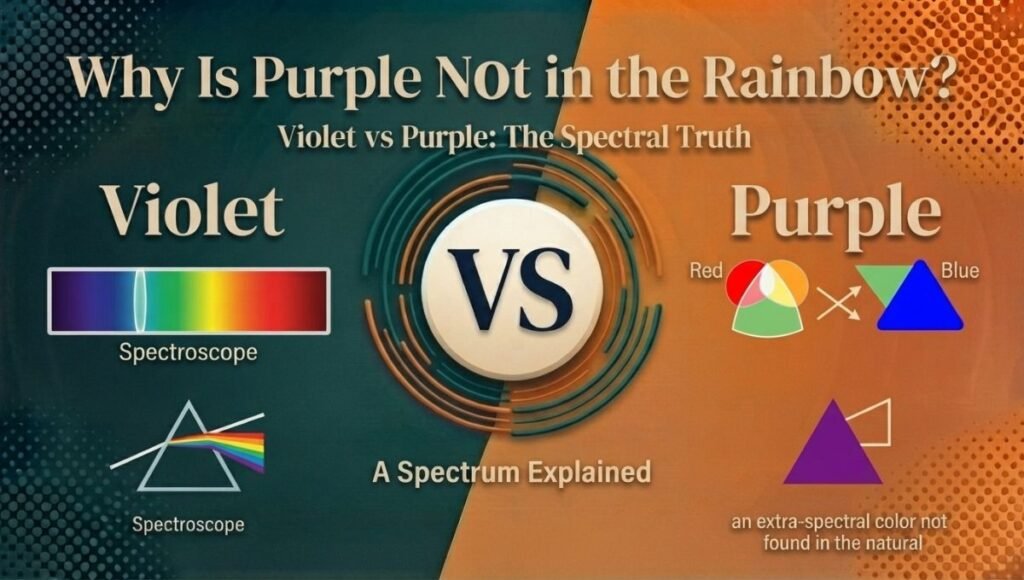
Nothing in a rainbow produces that blend, so purple has no band of its own. Violet does, which is why the rainbow ends with violet, not purple. Magenta is another color that works the same way.
Violet vs Indigo vs Purple Comparison Table
| Term | Correct? | Meaning | Best use |
| Violet | Yes | Spectral color at the short end of visible light; also a flower | Science, rainbows, flowers, cool light purples |
| Indigo | Yes | Deep blue with a violet tint; also a dye | Denim, dyes, the seven-color rainbow list |
| Purple | Yes | Broad range of red and blue blends | Everyday speech, clothing, branding, general descriptions |
None of these words is wrong. Each one does a different job, and the choice depends on what you are describing.
More related Post : What Happen or What Happened? 7 Simple Rules for the Correct Form https://feastinsidar.com/what-happen-or-what-happened/
Grammar, Spelling, and Pronunciation of Each Color Word
The grammar behind violet vs indigo vs purple is refreshingly simple. All three work as a noun (“Violet is my favorite”) and as an adjective (“a violet scarf”).
Plural forms follow common patterns: violets, indigos (indigoes is a less common variant), and purples. When you name several shades, the plural noun is natural: “The palette includes two purples and an indigo.”
Purple is the only one that also works as a verb, mostly in literary writing: “His face purpled with rage.” Violet and indigo have no standard verb form.
Here is how US speakers typically say them:
- Violet: VYE-uh-lit (often shortened to VYE-lit)
- Indigo: IN-dih-go
- Purple: PUR-pul
British English follows the same pronunciations. The main difference is spelling in related words, such as “colour” instead of “color.”
Where Did the Names Violet, Indigo, and Purple Come From?
Violet comes from Old French violete, a small form of viole, which traces back to the Latin word viola for the flower. The color was named after the plant.
Indigo goes back to the Greek word indikon, meaning “from India,” passed through Latin. The dye itself comes from plants in the Indigofera family and was a major trade item for centuries.
Purple comes from the Latin purpura, which came from the Greek porphyra. That word named a costly dye made from sea snails. Because the dye was so expensive, purple became linked with royalty, a connection that still shows up in phrases like “born to the purple.”
What Are the Most Common Shades of Each Color?
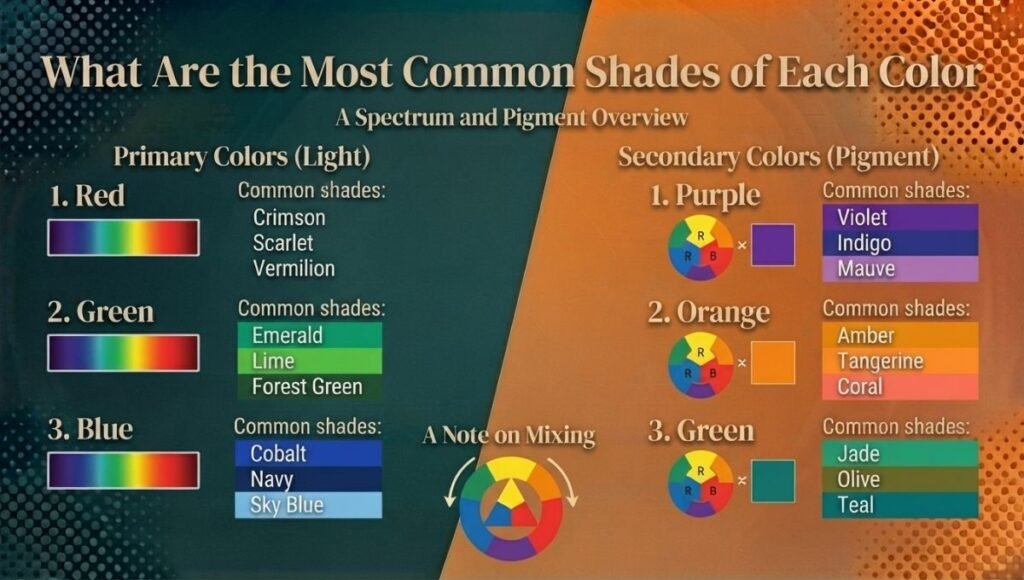
Shade names help when you need more precision than the three main words. In violet vs indigo vs purple comparisons, designers often lean on these familiar labels:
- Violet family: lavender, lilac, periwinkle, amethyst
- Indigo family: midnight indigo, navy-leaning indigo, denim blue
- Purple family: plum, mauve, grape, eggplant, orchid
Web design adds another wrinkle. CSS defines indigo as #4B0082, purple as #800080, and violet as #EE82EE. That web violet looks lighter and pinker than spectral violet because screens mix red, green, and blue light, so they can only approximate true violet.
How Do You Use Violet, Indigo, and Purple in a Sentence?
Here are natural examples for different situations:
- Everyday conversation: “The sky faded from orange to a soft violet.”
- Workplace: “Please use the indigo in the brand palette for the header, not the purple from the footer.”
- Academic writing: “Newton divided the spectrum into seven bands, including indigo and violet.”
- Email: “Hi Maria, the sample came back a deeper purple than expected. Could we try a lighter violet?”
- Casual writing: “My new jeans are dark indigo, but they look almost black at night.”
In the workplace example, the writer separates two shades by name, so the reader knows exactly which one is meant. In the academic example, indigo and violet are used as spectrum bands, which is their most precise meaning.
What Mistakes Do People Make With These Colors?
Mixing up violet vs indigo vs purple is completely normal, since even color charts disagree. Here are the most common slips.
Incorrect: The rainbow starts with red and ends with purple.
Correct: The rainbow starts with red and ends with violet.
Purple is a mixed color, so it has no band in the spectrum.
Incorrect: Indigo is just another word for purple.
Correct: Indigo is a deep blue with a violet tint.
Indigo leans blue, while purple leans toward red and blue equally.
Incorrect: The flowers were a bright violent color.
Correct: The flowers were a bright violet color.
“Violent” means forceful. One letter changes the meaning completely.
Incorrect: He wore indego jeans.
Correct: He wore indigo jeans.
The spelling follows the Greek-Latin root, with an “i” in the middle.
Which Color Word Should You Choose in Real Life?
When you face violet vs indigo vs purple in a real project, ask what you are describing. A few simple rules cover most cases:
- Use violet for rainbows, light, flowers, and cool, bright purples.
- Use indigo for deep, dark blues with a hint of violet, like denim or dye.
- Use purple when you want a general, friendly term that everyone understands.
If you are writing for scientists, designers, or print specifications, pick the narrower word or add a shade name. If you are chatting with friends, purple works almost everywhere.
Violet, Indigo, and Purple FAQs
Is violet the same as purple?
No. In everyday speech people use them loosely, but violet is a spectral color with its own wavelength, while purple is a mix of red and blue light.
Is indigo blue or purple?
Indigo leans blue. It is a deep, dark blue with a violet tint, and it sits between blue and violet in the classic rainbow order.
Which color comes last in the rainbow?
Violet comes last. The standard order is red, orange, yellow, green, blue, indigo, violet.
Is indigo a real color?
Yes. Indigo is a legitimate color word and a well-known dye. Its status as a separate band in the spectrum is a convention that some modern charts skip.
What Should You Remember About These Three Colors?
Violet is the edge of the rainbow, indigo is the deep blue just before it, and purple is the blend of red and blue that has no band of its own. Keep that in mind and violet vs indigo vs purple will never slow you down again.