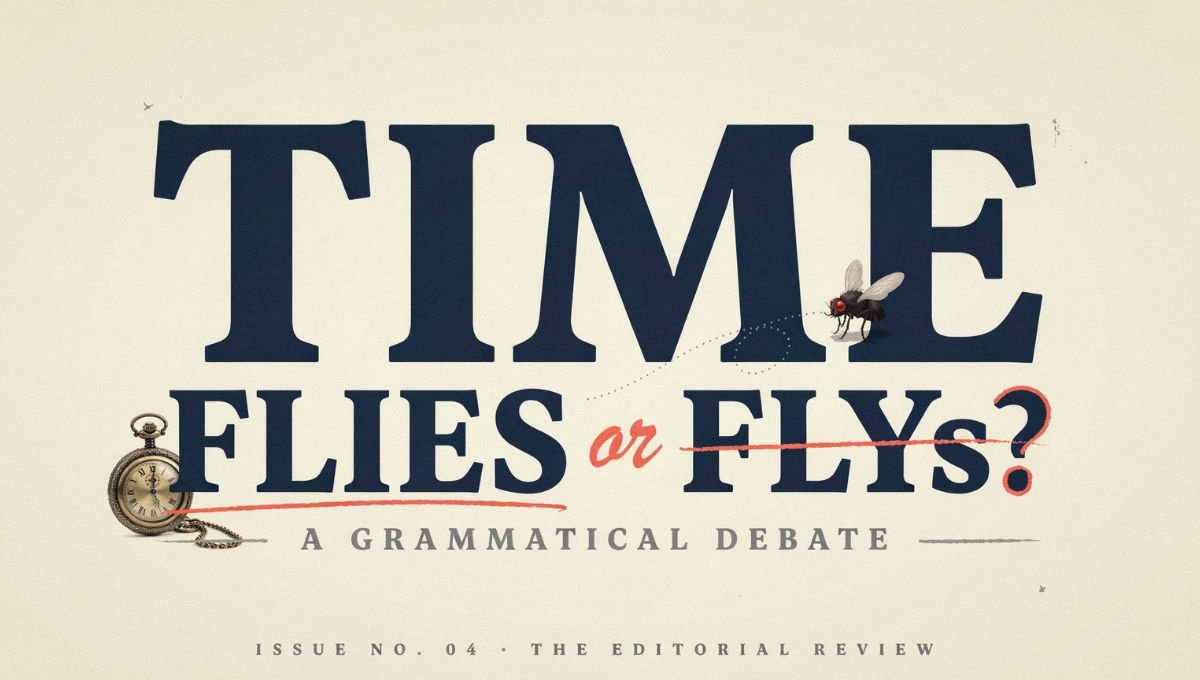
You’ve probably typed Time Flies or Time Flys and paused, wondering if the spelling looked right. That hesitation is common because English has some tricky rules for words ending in “y.” Here’s the short version: “time flies” is the correct spelling, and “time flys” is a spelling mistake.
The Direct Answer
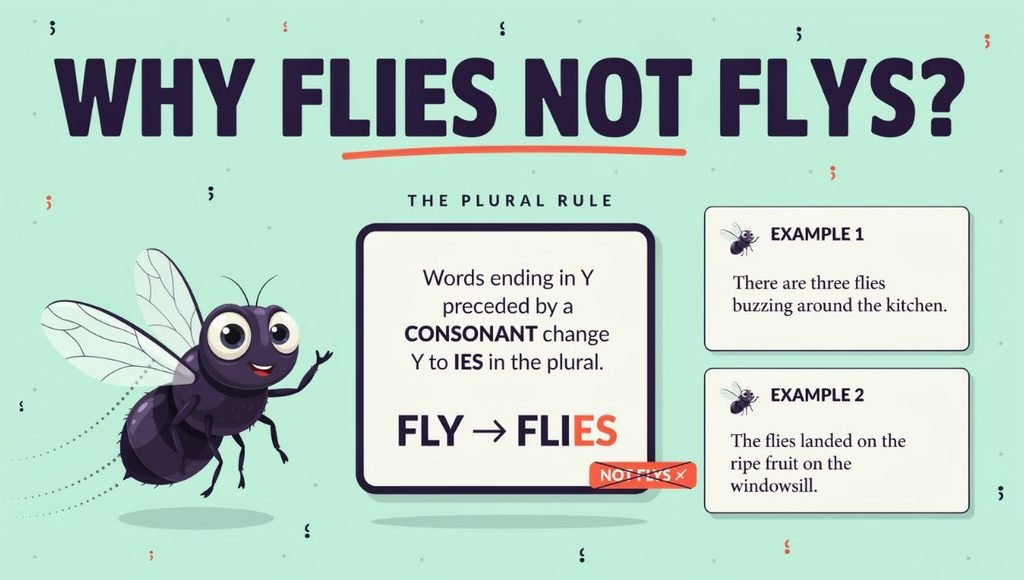
When asking Time Flies or Time Flys, the answer is simple: “Time flies” is correct. “Time flys” is not a recognized word in standard English. The confusion happens because many English speakers assume you simply add an “s” to a verb to make it agree with a singular subject like “time.” But when a verb ends in a consonant plus “y,” the “y” changes to “i” before you add “es.” That rule turns “fly” into “flies,” not “flys.”
What Does “Time Flies” Mean?
The phrase Time Flies or Time Flys often appears when people want to know which spelling is correct and what the expression means. “Time flies” is an idiom used to describe how quickly time seems to pass, especially when you’re busy, enjoying yourself, or looking back on a period of your life. It doesn’t describe anything moving through the air. It’s a figurative expression, not a literal one.
You’ll hear it in casual conversation (“Time flies when you’re having fun”) and in more reflective contexts (“Time flies, and suddenly the kids are grown”). Either way, the spelling stays the same: flies, never flys.
Why Is “Time Flys” Wrong?
The question Time Flies or Time Flys comes down to a basic English spelling rule. When a verb ends in a consonant followed by “y,” you drop the “y” and add “ies” to form the third person singular present tense. “Cry” becomes “cries.” “Try” becomes “tries.” “Fly” becomes “flies.”
“Flys” would only make sense if “fly” ended in a vowel plus “y,” the way “play” becomes “plays” or “stay” becomes “stays.” Since “fly” ends in a consonant (l) plus “y,” that shortcut doesn’t apply, and “flys” simply isn’t a standard English word.
The Grammar Behind “Flies” vs “Flys”
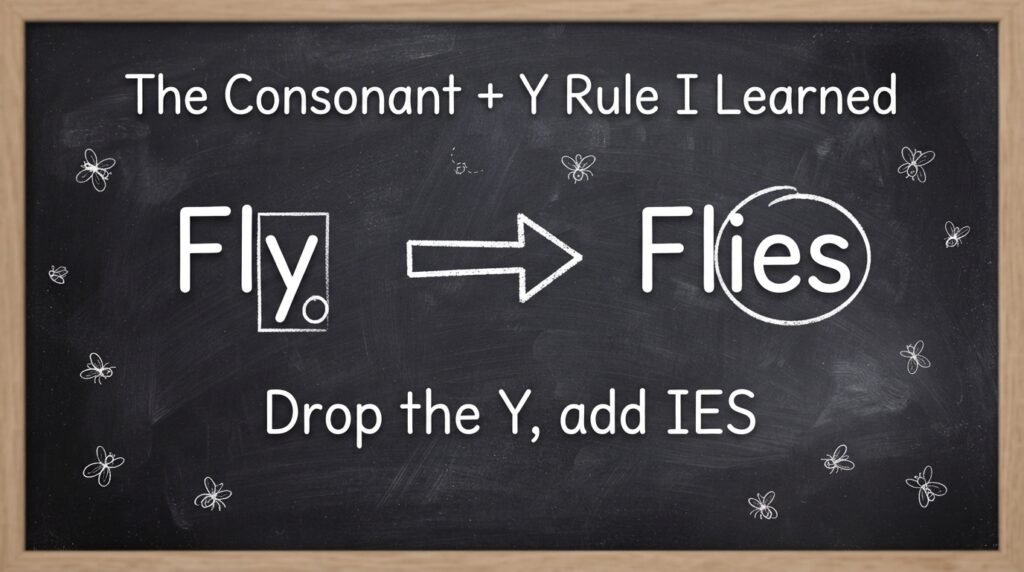
Here’s the rule broken down so it sticks:
- Consonant + y: drop the “y,” add “ies” (fly to flies, cry to cries, try to tries)
- Vowel + y: just add “s” (play to plays, stay to stays, enjoy to enjoys)
“Fly” is preceded by the consonant “l,” so it follows the first pattern. This same rule governs the plural of nouns too. “City” becomes “cities” for the same reason a fly becomes flies. If you memorize this one pattern, you’ll avoid a whole category of common English spelling errors, not just this one.
Part of speech matters here as well. In “time flies,” flies is a verb in its third person singular present tense form, agreeing with the singular noun “time.” It is not the plural of the insect “fly,” even though the two words look identical on the page.
Where Did “Time Flies” Come From?
If you’re researching Time Flies or Time Flys, it’s also helpful to understand where the correct phrase came from.
The phrase has roots in the Latin expression “tempus fugit,” which translates roughly to “time flees” or “time flies.” The idea appears in classical Latin poetry, most notably in the works of the Roman poet Virgil, where the sentiment describes how quickly life moves forward while people are occupied with other things.
The English version of the idea entered common usage well before the twentieth century and became a standard idiom in everyday speech. Its staying power comes from how universally relatable the feeling is. Almost everyone has experienced a moment where hours, months, or years seem to have disappeared faster than expected.
How to Pronounce “Time Flies”
For anyone comparing Time Flies or Time Flys, pronunciation doesn’t change the spelling.
“Time” rhymes with “dime,” and “flies” rhymes with “eyes.” Put together, it sounds like TIME-FLYZE, with roughly even stress on both words. There’s no silent letter or tricky sound to worry about, which makes the spelling error even more avoidable once you know the rule.
“Time Flies” vs “Time Flys” at a Glance
| Term | Correct? | Meaning | Use |
|---|---|---|---|
| Time flies | Yes | Time passes quickly, often unnoticed | Standard idiom in spoken and written English |
| Time flys | No | Not a recognized word or phrase | Common misspelling to avoid |
How to Use “Time Flies” in a Sentence
Once you understand Time Flies or Time Flys, using the correct form becomes much easier.
“Time flies” typically works as a standalone statement or as the start of a longer thought. It’s flexible enough for casual chats, emails, and even more formal writing when you want to acknowledge how quickly a period has passed.
A few structural patterns you’ll see often:
- As a complete sentence: “Time flies.”
- Followed by a reason: “Time flies when you’re on vacation.”
- Inside a larger sentence: “I can’t believe time flies this fast during finals week.”
Real Life Examples of “Time Flies”
Everyday conversation: “Time flies, I swear it was just Monday and now it’s Friday.”
Workplace communication: “Time flies during a busy quarter, so let’s make sure we’re tracking deadlines closely.”
Academic writing: “The study illustrates how perceived time flies more quickly during high engagement tasks than during passive ones.”
Email: “Time flies! It’s already been a year since we launched this project.”
Business writing: “As the saying goes, time flies, which is why we recommend reviewing our goals every quarter rather than waiting until year end.”
Casual texting: “lol time flies, can’t believe it’s already August.”
Each of these examples keeps the idiom’s figurative meaning intact while adjusting the tone to fit the context, from relaxed texting to more polished business language.
Common Mistakes People Make
Incorrect: Time flys when you’re having fun. Correct: Time flies when you’re having fun. The verb needs the “ies” ending because “fly” ends in a consonant plus “y.”
Incorrect: Times flies so fast these days. Correct: Time flies so fast these days. “Time” here is uncountable and singular, so it doesn’t take an “s.”
Incorrect: Time flyes when you’re busy. Correct: Time flies when you’re busy. This one overcorrects by adding an extra “e.” The correct form is simply “flies,” with no additional letters.
Is “Flys” Ever Correct?
There is one narrow exception worth knowing. “Flys” occasionally appears as an alternate, older spelling for a type of horse-drawn carriage, sometimes referenced in British historical or literary contexts. This usage is archaic and essentially never appears in modern American English. For the idiom about time passing, “flys” is always incorrect, with no legitimate exception.
Related Words and Phrases
A few connected expressions and terms can help round out your understanding:
- Tempus fugit: the original Latin phrase meaning “time flees”
- Fly, flew, flown: the base verb and its other conjugated forms
- Fly by: a related phrasal verb, as in “the weekend flew by”
- Third person singular verb: the grammatical category “flies” belongs to in this phrase
Quick Tips to Remember the Correct Spelling

If you ever hesitate while typing this phrase, try picturing the insect. A single fly becomes multiple flies, following the exact same consonant plus “y” rule. Since the verb form mirrors the noun’s plural spelling, remembering one helps you remember the other.
You can also lean on autocorrect as a backup, though it’s worth understanding the rule itself so you’re not depending on software every time you write.
Frequently Asked Questions
Is “time flies” or “time flys” correct?
Time Flies or Time Flys is a common spelling question. “Time flies” is the correct spelling. “Time flys” is a common misspelling and is not standard English.
What does “time flies” mean?
It means that time seems to pass quickly, often without you noticing, especially during enjoyable or busy periods.
How do I use “time flies” in a sentence?
You can use it on its own, such as “Time flies,” or extend it with a reason, such as “Time flies when you’re traveling.”
Why do people misspell it as “time flys”?
The mistake happens because writers assume you simply add “s” to make a verb agree with a singular subject, without applying the rule that changes “y” to “ies” after a consonant.
Is “flys” ever a real word?
It appears rarely as an old-fashioned term for a horse-drawn carriage, but it has no connection to the idiom about time and should not be used in that context.
Final Answer
Time Flies or Time Flys has a clear answer: “Time flies” is the correct spelling, always with an “ies” ending, never with “ys.” The rule behind it applies to plenty of other English words, so once it clicks here, you’ll spell “cries,” “tries,” and “flies” correctly without a second thought.
The next time you catch yourself typing this phrase, you’ll know exactly why the “i” belongs there.











3 thoughts on “Time Flies or Time Flys? I Found the Definitive Answer in 2026”