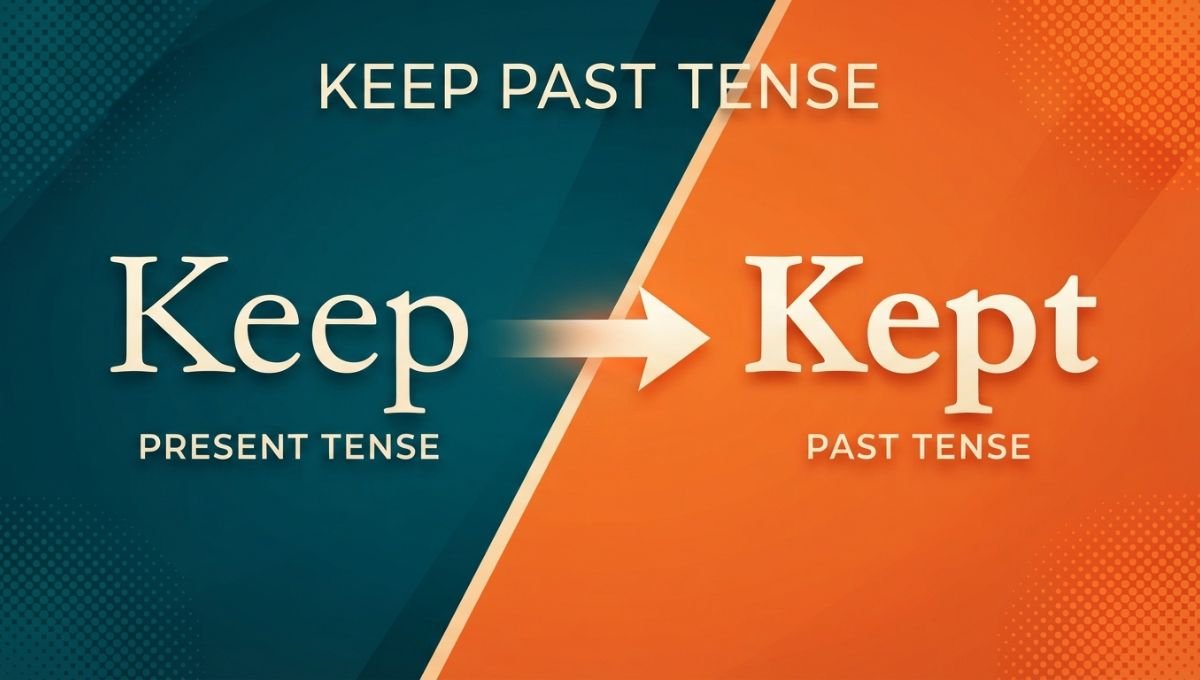
Adding “-ed” to a verb usually works, so why doesn’t “keeped” show up as correct? The keep past tense question confuses many English learners because “keep” doesn’t follow the standard rule most verbs use. Here’s the quick answer: understanding the keep past tense form takes just a few minutes once you see the pattern behind it.
Quick Answer: What Is the Past Tense of Keep?
The past tense of “keep” is “kept.” “Keep” is an irregular verb, meaning it doesn’t follow the standard “add -ed” rule that regular verbs use. “Keeped” is not a recognized word in any English dictionary. Whenever you need the keep past tense form, “kept” is the only correct choice.
What Does “Kept” Mean?
“Kept” is the past tense and past participle form of the verb “keep,” meaning to have held onto, maintained, or continued something. It’s used any time you’re describing an action related to keeping that already happened:
- She kept the receipt in case she needed to return the item.
- They kept working late into the night.
The base form, “keep,” is used for present tense or future actions, while “kept” refers to something already completed.
Why “Keeped” Looks Right, But Isn’t
Most English learners assume every verb forms its past tense by adding “-ed,” which works for regular verbs like “walk” to “walked” or “jump” to “jumped.” Based on that pattern, “keep” would logically become “keeped.” But “keep” belongs to a group of irregular verbs that don’t follow this standard rule at all. This is exactly why the keep past tense mistake happens so often, especially among learners still building familiarity with irregular verb patterns.
Keep Is an Irregular Verb: Here’s Why
English verbs fall into two main categories: regular and irregular. Regular verbs simply add “-ed” to form the past tense, while irregular verbs change their spelling entirely, sometimes dramatically.
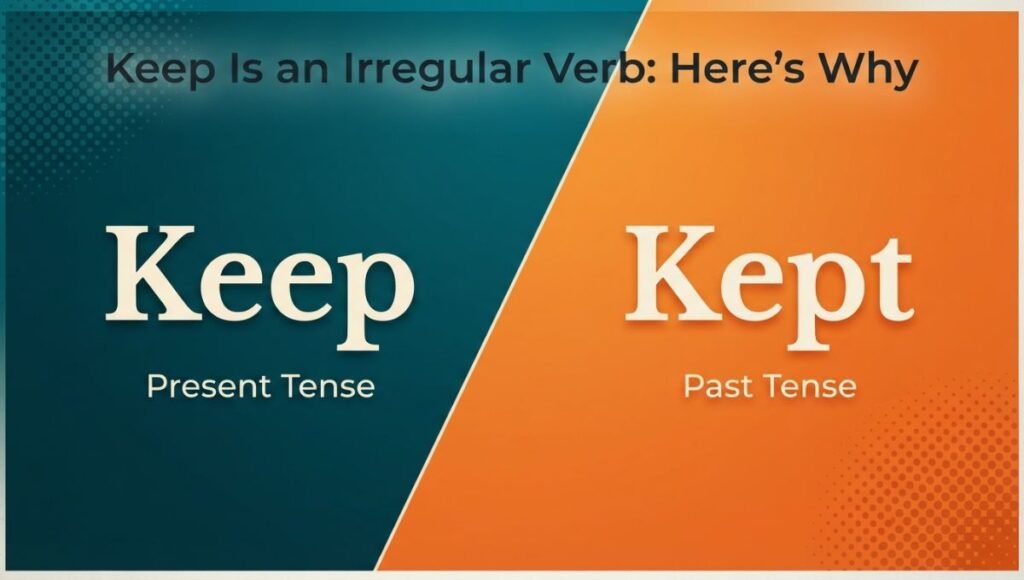
“Keep” changes from a long vowel sound to a short one when forming its past tense, shifting from “keep” to “kept.” This same pattern shows up in a small group of related irregular verbs:
- sleep → slept
- weep → wept
- sweep → swept
None of these add “-ed” to their base form. If you notice that keep past tense follows the same shift as “slept” and “wept,” the correct form becomes much easier to remember.
Keep, Kept, Kept: The Full Verb Chart
Since “keep” is irregular, it’s helpful to see its full set of forms in one place.
| Form | Word | Example |
| Base form | keep | I keep my keys on the hook by the door. |
| Past tense | kept | I kept my keys on the hook yesterday. |
| Past participle | kept | I have kept my keys on that hook for years. |
Notice that the past tense and past participle are identical, both “kept.” This is common among irregular verbs and makes the keep past tense form easier to apply consistently across different sentence structures.
Is “Keeped” Ever Acceptable?
No, not in standard English. “Keeped” does not appear in any major dictionary and is not used in formal, academic, or professional writing. It’s a common mistake made by English learners applying the regular verb pattern to an irregular verb. There is no context, casual or formal, where “keeped” is considered correct.
More related Post: Potatoes or Potatos: 5 Facts to Nail This Plural Spelling (2026) https://feastinsidar.com/potatoes-or-potatos/
Grammar Breakdown: Using “Kept” in Different Tenses
“Kept” appears in more than one verb tense, depending on the sentence structure.
Simple past tense: He kept the promise he made last year.
Present perfect tense: She has kept every letter he ever sent her.
Past perfect tense: They had kept the secret for over a decade before telling anyone.
In each case, “kept” stays the same. Only the helping verbs around it change to indicate a different tense, which makes learning the keep past tense form especially useful since it applies across multiple structures.
Where “Keep” Comes From
The word “keep” traces back to the Old English word cēpan, meaning to seize, hold, or pay attention to. Over time, its meaning expanded to include maintaining, preserving, or continuing something. The irregular past tense form “kept” developed through natural sound changes in Old and Middle English, a pattern shared by several other verbs that also shifted vowel sounds instead of adding a regular ending.
How to Pronounce “Kept”
“Kept” is pronounced with a short “e” sound, rhyming with “wept” and “slept.” There’s no pronunciation confusion tied to the keep past tense form, since “keeped” isn’t a real word to pronounce differently in the first place.
Keep Past Tense: Quick Reference Table
| Term | Correct? | Tense | Use |
| Kept | Yes | Past tense and past participle | Standard form in all writing, US and UK English |
| Keeped | No | Not a recognized word | Common mistake, never appears in dictionaries |
“Kept” in Real Sentences
Everyday conversation: “I kept the umbrella in the car just in case.”
Workplace communication: “The manager kept detailed notes from every client meeting.”
Academic writing: “Researchers kept careful records throughout the six month study.”
Email: “I’ve kept your feedback in mind while revising the proposal.”
Business writing: “The company kept its pricing consistent despite rising material costs.”
Casual writing: “We kept talking until way past midnight.”
Each of these sentences uses “kept” correctly, and none of them would work with “keeped” in place of it.
Common Mistakes With Keep and Kept
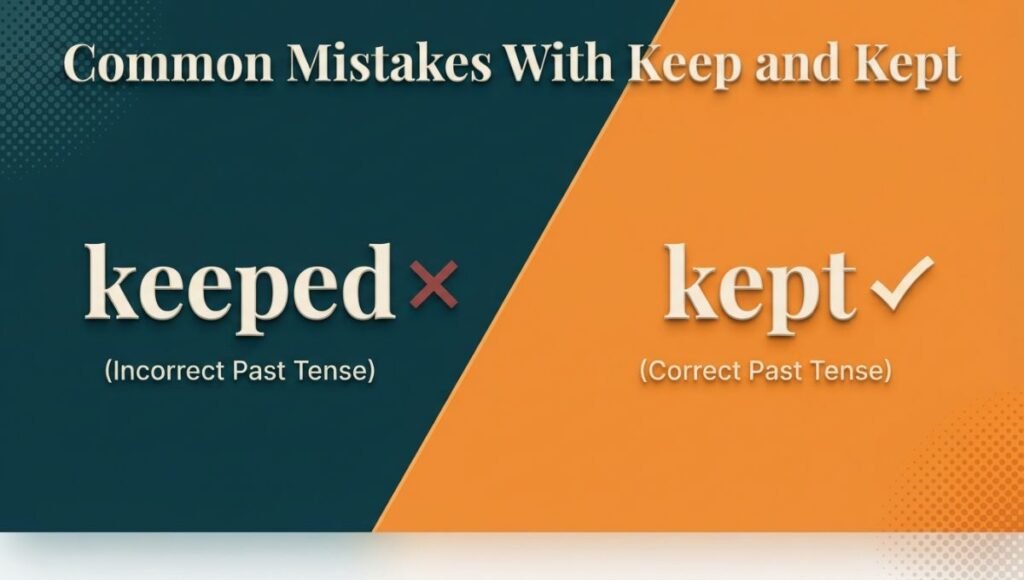
Incorrect: She keeped the old photos in a box.
Correct: She kept the old photos in a box.
This is the classic keep past tense mistake, caused by applying the regular “-ed” rule to an irregular verb.
Incorrect: He has keep the same job for ten years.
Correct: He has kept the same job for ten years.
This mistake uses the base form instead of the past participle needed after “has” in the present perfect tense.
Incorrect: They keept quiet during the meeting.
Correct: They kept quiet during the meeting.
This is simply a spelling error, adding an extra “e” that doesn’t belong in the correct past tense form.
Related Words and Terms
A few related terms are useful for context:
- Maintain: a more formal synonym for keeping something ongoing
- Retain: to continue holding onto something, often used in formal writing
- Irregular verb: the grammar category that “keep” belongs to
- Preserve: to keep something in its original condition
- Sustain: to keep something going over time
Knowing these related terms helps you choose the most precise word depending on context, rather than relying on “keep” or “kept” for every situation.
How to Remember the Correct Past Tense
A simple trick: group “keep” with its irregular verb family, like sleep, weep, and sweep. All four shift to a short “e” sound in the past tense: kept, slept, wept, and swept. None of them add “-ed.” Once this pattern clicks, the keep past tense form will come naturally every time.
FAQs About Keep Past Tense
Is “keeped” ever correct?
No. “Keeped” is not found in any major dictionary and is considered a grammar mistake in every context, formal or informal.
Why is “keep” an irregular verb?
“Keep” doesn’t follow the standard “-ed” pattern used by regular verbs. Instead, its vowel sound changes to form “kept,” a pattern shared by verbs like “sleep” and “weep.”
What is the past participle of “keep”?
The past participle is also “kept,” the same as the simple past tense form.
Is there a British English difference for “kept”?
No. “Kept” is used the same way in both American and British English, so there’s no regional variation to consider.
How do I use “kept” correctly in a sentence?
Use “kept” to describe a completed action related to holding, maintaining, or continuing something, such as “I kept my promise.”
The Bottom Line
The keep past tense question has one clear answer: “kept” is correct, and “keeped” is a common but incorrect form. Once you remember that “keep” belongs to the same irregular verb family as “sleep” and “weep,” using “kept” will become second nature.











1 thought on “Keep Past Tense (2026): 5 Easy Steps to Master the Correct Form”