You spotted the word “audiodisplayed” somewhere, and now you’re stuck. It looked odd, it wasn’t in any dictionary you checked, and a quick search didn’t clear things up either. Here’s the short version: audiodisplayed is not a standard English word. It’s a technical label, most often built by joining “audio” and “displayed” inside software, and its meaning shifts depending on where you found it.
Quick Answer: Is Audiodisplayed a Real Word?
No, “audiodisplayed” is not a recognized dictionary word in English. It won’t appear in Merriam-Webster, Oxford, or any standard grammar reference, because it isn’t a term that evolved through normal usage the way “audio” or “displayed” did on their own.
What you’re almost certainly looking at is one of two things: a compound technical identifier (the kind of name a developer gives an internal event, like audioDisplayed in code) or a misspelling or spacing error for the two-word phrase “audio displayed.” Either way, treating it as an established grammar term with its own fixed rule set would be misleading, and no reputable source can honestly give you one.
Why the Word Looks So Confusing
Part of the confusion comes from where people usually encounter it. It shows up in app screenshots, forum posts, or screen recordings, printed exactly as one solid word with no space and no hyphen. That formatting is a strong clue on its own.
Software doesn’t follow the same spelling conventions people use in emails or essays. Programmers commonly write multi-word labels as a single unbroken string, using a capital letter to mark where a new word starts, like audioDisplayed or AudioDisplayed. When that label gets shown to an end user, whether in a log file, a debug menu, or a leaked internal string, the capitalization sometimes disappears and you’re left with the flattened version: audiodisplayed.
Breaking Down the Two Real Words Inside It
Even though “audiodisplayed” isn’t a word on its own, the two pieces that make it up are perfectly ordinary English.
- Audio is a noun and adjective referring to sound, especially recorded or transmitted sound.
- Displayed is the past tense and past participle of the verb “display,” meaning shown, presented, or made visible.
Put together informally, the phrase suggests “audio that was shown or presented,” most likely referring to an audio player, waveform, or voice message becoming visible in an interface, rather than the sound itself being heard.
Grammar Notes: Is It One Word, Two Words, or Hyphenated?
If you need to write this yourself, here’s the practical guidance:
- In standard prose, use two separate words: “audio displayed” or, more naturally, “the audio was displayed.”
- In code or technical documentation, a single concatenated form like audioDisplayed (camelCase) or audio_displayed (snake_case) is normal and expected. That’s a programming convention, not a grammar rule for regular writing.
- A hyphenated form, “audio-displayed,” would only make sense as a compound adjective directly before a noun, such as “an audio-displayed notification.” Even then, it’s uncommon and not something you’ll find recommended in style guides.
There is no plural form of “audiodisplayed” and no verb conjugation beyond what “display” already has (display, displays, displayed, displaying). Treat “audio” as a separate noun modifying the verb, not as a fused prefix with its own grammar.
Where People Actually Encounter This Term

Understanding the setting where you saw “audiodisplayed” tells you far more than the word itself does.
Messaging and chat apps. Some apps track internal states for voice messages, such as when the audio player becomes visible on screen. If that internal event name leaks into a visible log or notification, it can appear as “audiodisplayed.”
Analytics dashboards. Product teams track how users interact with media elements. An event labeled “audio displayed” might simply record that a player rendered on the page, which helps developers measure how often people even see an audio option, separate from whether they use it.
Developer tools and error logs. Debug screens often expose raw internal variable names that were never meant for a general audience. This is one of the more likely places you’d run into the exact, unspaced spelling.
Typos and autocorrect. It’s also entirely possible someone simply mistyped “audio displayed” as one word in a message, caption, or comment, and it spread from there.
Audiodisplayed vs. Audio Played: What’s the Real Difference?
This is the comparison most people actually want when they search for this term.
| Term | What It Likely Refers To | Confirms the Audio Was Heard? |
| Audio displayed | The audio player or file became visible in an interface | No |
| Audio played | Playback of the audio began | Suggests it, not guaranteed to be heard fully |
| Audio delivered | The audio file reached its destination through a network or messaging system | No |
Displayed describes visibility. Played describes an action. A voice message can appear on someone’s screen and never be tapped, which means “displayed” carries no guarantee that anyone actually listened. This distinction matters most in messaging contexts, where people sometimes read far more into a status label than the label itself supports.
A Realistic Example
Imagine you send a co-worker a short voice memo through a work chat tool. They open the conversation for an unrelated reason, and the memo’s audio player loads on their screen along with the rest of the conversation. Behind the scenes, the app might log that the memo was displayed.
They never touch the play button.
If you only know that the memo was “displayed,” you have no real evidence they heard anything. That’s the core, practical takeaway behind the audiodisplayed meaning wherever the term turns up: visibility and listening are two separate events, and only one of them is confirmed.
More related post : Verbiage or Verbage: The 1 Correct Spelling and 7 Ways to Use It Right https://feastinsidar.com/verbage-or-verbiage/
Common Mistakes When Using or Interpreting This Term
Incorrect: “She saw the audiodisplayed status, so she must have listened to my whole message.” Correct: “The audio was displayed, but that doesn’t confirm she played or finished listening to it.” Displaying and listening are not the same action, and the label alone can’t prove intent or attention.
Incorrect: Writing “audiodisplayed” as a formal noun in an essay or article, as if it’s dictionary-approved. Correct: Use “audio display” (noun phrase) or “the audio was displayed” (verb phrase) in regular writing. Standard English keeps these as separate words; the fused spelling belongs to technical contexts, not general prose.
Incorrect: Assuming every app defines this term identically. Correct: Check the specific platform, since event names and their exact triggers vary from one system to another. There’s no single governing body deciding how software labels internal events, so definitions genuinely differ.
Related Terms Worth Knowing
- Audio display — the general, correctly spaced version of the phrase
- Read receipt — a separate status tracking whether a text message was viewed
- Playback event — a broader technical term for anything related to starting, pausing, or stopping audio or video
- Media rendering — the technical process of an interface loading and presenting a media element on screen
How to Figure Out What It Means in Your Specific Case
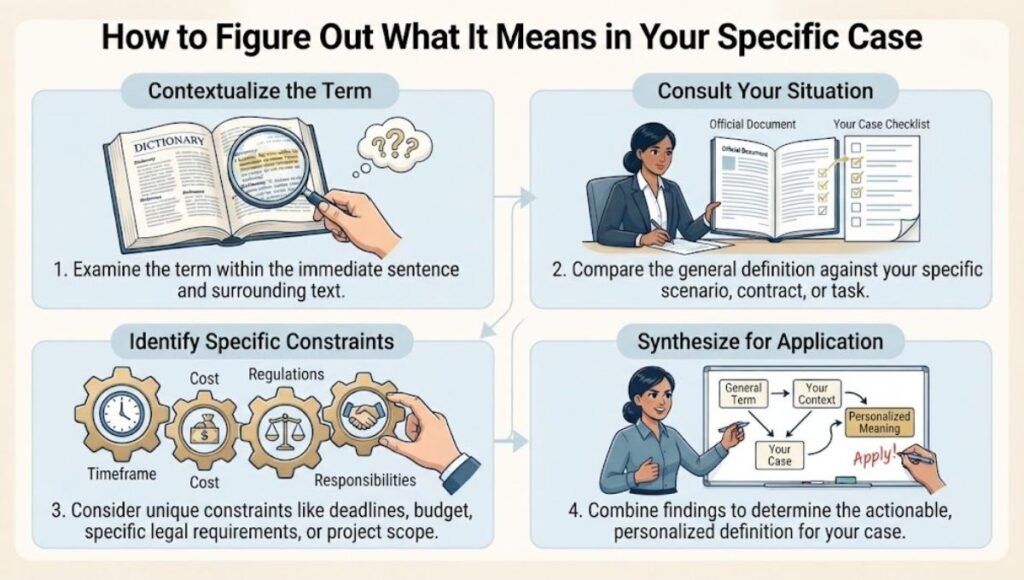
If you’re still trying to pin down an exact meaning, ask three questions:
- Where exactly did I see it? A chat app, a website, a debug screen, and a casual message all point toward different explanations.
- What surrounded it? Nearby labels like “delivered,” “read,” or “played” can help you place “displayed” correctly in a sequence.
- Could it just be a typo? If it appeared in a casual sentence rather than a technical label, a simple spacing mistake for “audio displayed” is often the most likely explanation.
Frequently Asked Questions
Is “audiodisplayed” a real English word?
No. It isn’t found in standard dictionaries. It’s typically a technical label or a misspelling of the two-word phrase “audio displayed.”
What does “audiodisplayed” mean?
It generally points to an audio element, like a player or voice message, becoming visible within an app, website, or system, without confirming that anyone actually played or listened to it.
Does audiodisplayed mean someone listened to my message?
No. Being displayed only means the audio became visible on screen. Listening would require a separate, confirmed playback action.
Should I write it as one word or two?
Use two words, “audio displayed,” in normal writing. The single-word form is a programming or technical naming convention, not standard English.
Why do some apps show it as one unspaced word?
Because internal event names in code are often written without spaces, using capitalization to separate words, such as audioDisplayed. That format sometimes leaks into what end users see.
Final Answer: Audiodisplayed Meaning
There’s no dictionary entry, no fixed grammar rule, and no single authority behind “audiodisplayed.” What it almost always comes down to is a technical way of saying that an audio element was shown or rendered somewhere, most likely inside app code, an analytics tool, or a debug log, and occasionally just a spacing mistake for “audio displayed.” The one thing worth remembering: displayed means visible, not heard, so don’t read more certainty into the audiodisplayed meaning than the term actually provides.











1 thought on “Audiodisplayed Meaning: What Does It Mean and How Is It Used? (2026 Guide)”