You have seen both spellings online and now you are stuck on pricey or pricy, unsure which one is actually right. That mix up is common, and it happens because informal words like this one do not always get the spelling consistency that formal vocabulary does. Here is the short version: when it comes to pricey or pricy, “pricey” is the correct and far more common spelling, while “pricy” is a rare variant that most dictionaries and style guides do not recommend. The rest of this guide breaks down exactly why, and how to use the word with confidence.
The Quick Answer to Pricey or Pricy
Pricey is the standard, dictionary preferred spelling in both American and British English. Pricy technically appears in a few dictionaries as a secondary variant, but it is rarely used in professional or everyday writing. If you are ever unsure which one to type, choose pricey.
What Pricey Actually Means
Pricey is an informal adjective that describes something costing more money than expected, or something that feels expensive relative to its value. It carries a slightly conversational, sometimes humorous tone, which is why you see it often in reviews, casual writing, and everyday speech rather than in formal legal or academic documents.
For example, “This restaurant is pricey” means the prices feel high, often with a hint of surprise or mild complaint.
Is Pricy Ever Correct?
Pricy is not technically wrong, and a small number of dictionaries list it as an accepted alternate spelling. However, it is considered nonstandard by most modern style guides and appears far less frequently in published writing. If your goal is clarity and professionalism, pricey is always the safer and more recognizable choice between pricey or pricy.
Think of pricy the way you might think of “judgement” versus “judgment”: one form is technically listed somewhere, but the other is what virtually everyone actually uses.
Pricey vs Pricy: Side by Side Comparison
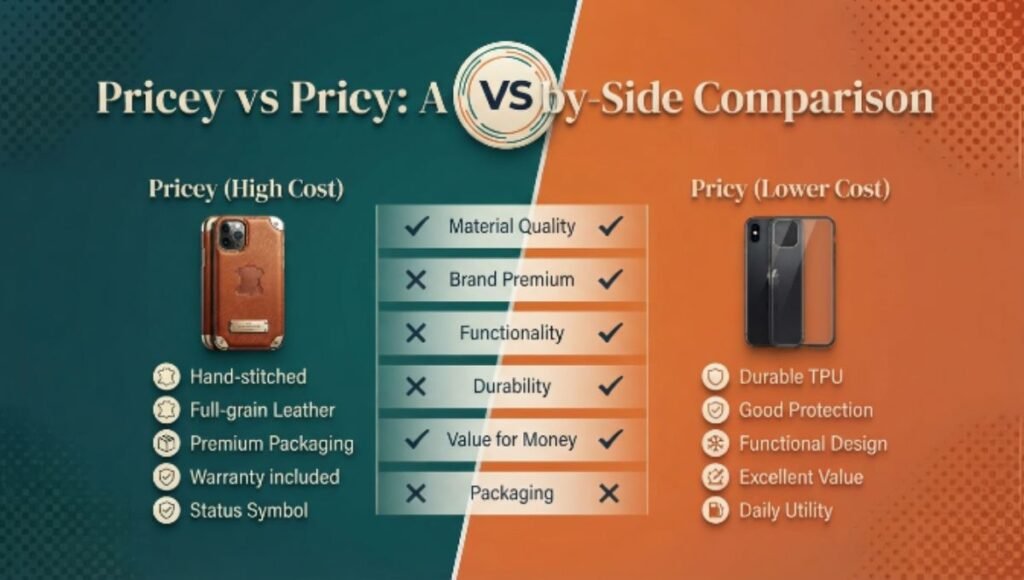
| Form | Status | Frequency of Use | Recommended For |
| Pricey | Standard spelling | Very common | All writing, formal and informal |
| Pricy | Rare variant | Uncommon | Avoid unless quoting a specific source |
Grammar Breakdown: Adjective Forms
Pricey follows a common English spelling pattern where a short word ending in a consonant plus “e” adds “-ey” to form the adjective, similar to words like “homey” or “matey.” This is part of why “pricey” feels natural and “pricy” looks slightly off to most native speakers, even though the “y” ending would technically also work by a different spelling rule.
Comparative and superlative forms follow the standard pattern: pricey, pricier, priciest. Notice that the “e” drops before adding “-ier” or “-iest,” which is a regular rule for adjectives ending in “y” preceded by a consonant.
- Positive: pricey
- Comparative: pricier
- Superlative: priciest
There is no separate adverb form. To describe an action, you would typically say something is “priced high” or “expensive” rather than forcing an adverb version of pricey.
More related Post :
Practise or Practice: The 2026 Guide to Getting It Right Every Time https://feastinsidar.com/practise-or-practice/
Pronunciation and Everyday Usage
Both pricey and pricy are pronounced the same way: “PRY-see.” Since the sound is identical, many writers only discover the spelling difference when they see the word written down, which is exactly why the confusion around pricey or pricy keeps coming up in searches.
Where the Word Comes From
Pricey is a fairly modern addition to English, built by adding the informal “-ey” suffix to the noun “price.” This kind of suffix appears in other casual English adjectives, such as “chatty” from “chat” or “homey” from “home.” The word gained popularity in the twentieth century as informal, conversational adjectives became more common in everyday writing, reviews, and spoken English.
American English vs British English Usage
Both American and British English treat pricey the same way, as an informal adjective meaning expensive. There is no meaningful regional split here the way there is with words like color and colour. Both regions favor the same spelling, which makes this one of the easier informal adjectives for global writers to use correctly.
Real Life Examples in Everyday Use
Everyday conversation: “That new phone looks great, but it’s pretty pricey.”
Workplace email: “The vendor’s quote came in a bit pricey compared to last year’s contract.”
Casual writing: “I love this coffee shop, even though the lattes are pricey.”
Business writing: “Leadership flagged the proposed software as pricey relative to competing tools.”
Academic writing (rare, informal register): “Students often described campus housing as pricey compared to off campus options.” This example works because informal adjectives sometimes appear in survey quotes or qualitative research, even within otherwise formal writing.
Formal writing (avoid): In a legal contract or technical report, replace pricey with a more formal word like “expensive” or “costly,” since pricey reads as too casual for that context.
Common Mistakes With Pricey or Pricy
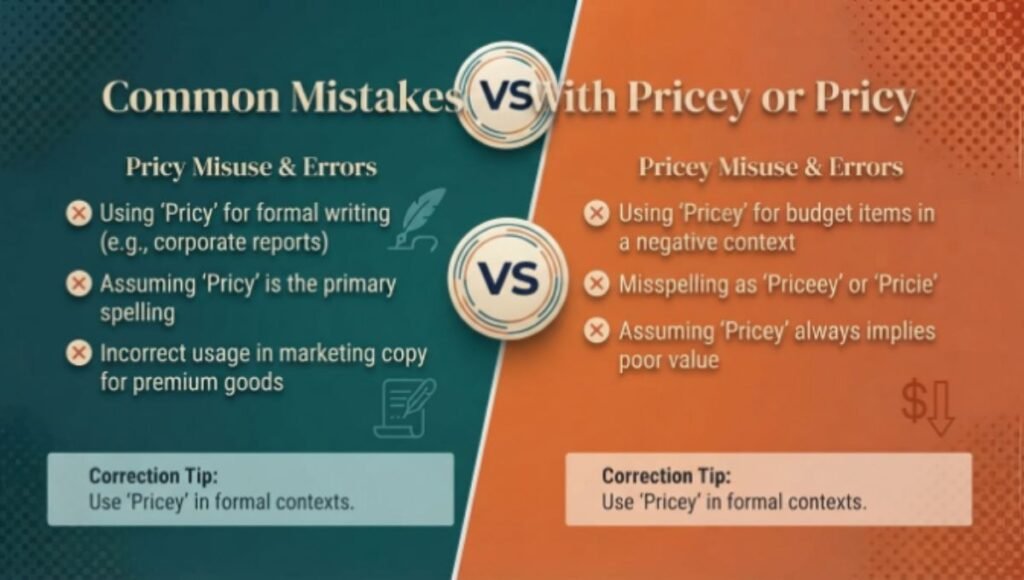
Incorrect: “The tickets were pricy for a weekday show.” Correct: “The tickets were pricey for a weekday show.” Pricy is not wrong by every dictionary, but it looks like a typo to most readers, so pricey is the safer and more professional choice.
Incorrect: “This is the pricyest option on the menu.” Correct: “This is the priciest option on the menu.” The comparative and superlative forms always drop the silent “e” before adding “-ier” or “-iest.”
Incorrect: “That was a very pricey decision to make quickly.” Correct: “That was a costly decision to make quickly.” Pricey describes cost of goods or services, not the seriousness of a decision, so a word like “costly” fits better in that context.
Mistakes like these are a normal part of learning the correct spelling, so do not feel discouraged if you have made one before.
Related Words and Synonyms
If pricey does not quite fit your tone, several related words carry similar meaning with slightly different levels of formality:
- Expensive (neutral, formal)
- Costly (formal, often used for decisions or consequences)
- Overpriced (implies the cost is unfair, not just high)
- Steep (informal, similar tone to pricey)
- High end (implies quality along with cost, not just expense)
Practical Guidance for Writers
If you are writing casual content, blog posts, product reviews, or conversational copy, pricey is the natural, reader friendly choice. If you are writing something formal, such as a contract, academic paper, or official report, choose “expensive” or “costly” instead, since pricey can feel too informal for those settings.
When in doubt about pricey or pricy, remember that spell checkers, style guides, and virtually every major dictionary favor the “-ey” spelling, so sticking with pricey will keep your writing consistent and easy to trust.
Frequently Asked Questions
Is pricey or pricy the correct spelling?
Pricey is the correct and standard spelling. Pricy is a rare variant that some dictionaries list but that most style guides do not recommend.
What does pricey mean?
Pricey means something costs more than expected or feels expensive, often with a slightly informal or conversational tone.
Can I use pricy in professional writing?
It is best to avoid pricy in professional writing, since it looks unfamiliar to most readers and is far less common than pricey.
What is the comparative form of pricey?
The comparative form is pricier, and the superlative form is priciest, following the standard rule of dropping the “e” before adding the ending.
Is there a difference between pricey in American and British English?
No, pricey is used the same way in both American and British English, with no regional spelling split.
Conclusion
When you are deciding between pricey or pricy, the choice is simple: pricey is the standard, widely recognized spelling, while pricy is a rare variant best avoided in most writing. Remember that one detail, and you will never second guess this word again.








1 thought on “Pricey or Pricy: The 2026 Guide to the One Correct Spelling”